McKinsey Solve Cheating
Case Study: How We Cheated the Digital Assessments and Interviews to Get Offers from Bain, BCG, and McKinsey


Client: Experienced Hire from India
Past Result: GRE Score 338 (Top 1%)
The Goal: Get job offers from the "Big Three" consulting firms.
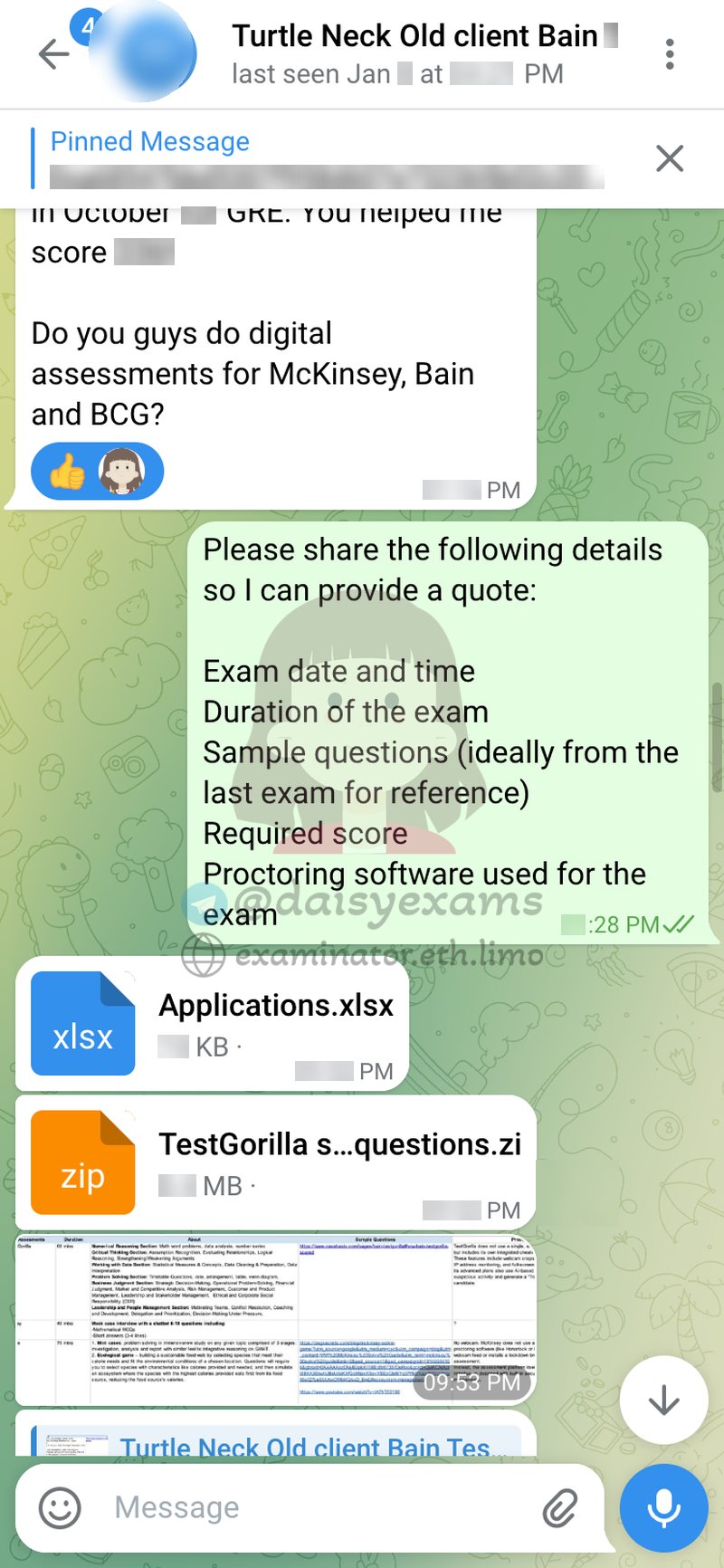
We had a client come back to us after we helped him crush his GRE. He is smart, but he was worried about the new digital tests these firms use. They don't just test your math; they watch your every move through the camera and track your mouse.
Here is how we helped him beat the system for Bain (his top choice), BCG, and McKinsey.
Part 1: The Three Tests (And Why They Are Hard)
The "Big Three" use three different online tests to filter people out.
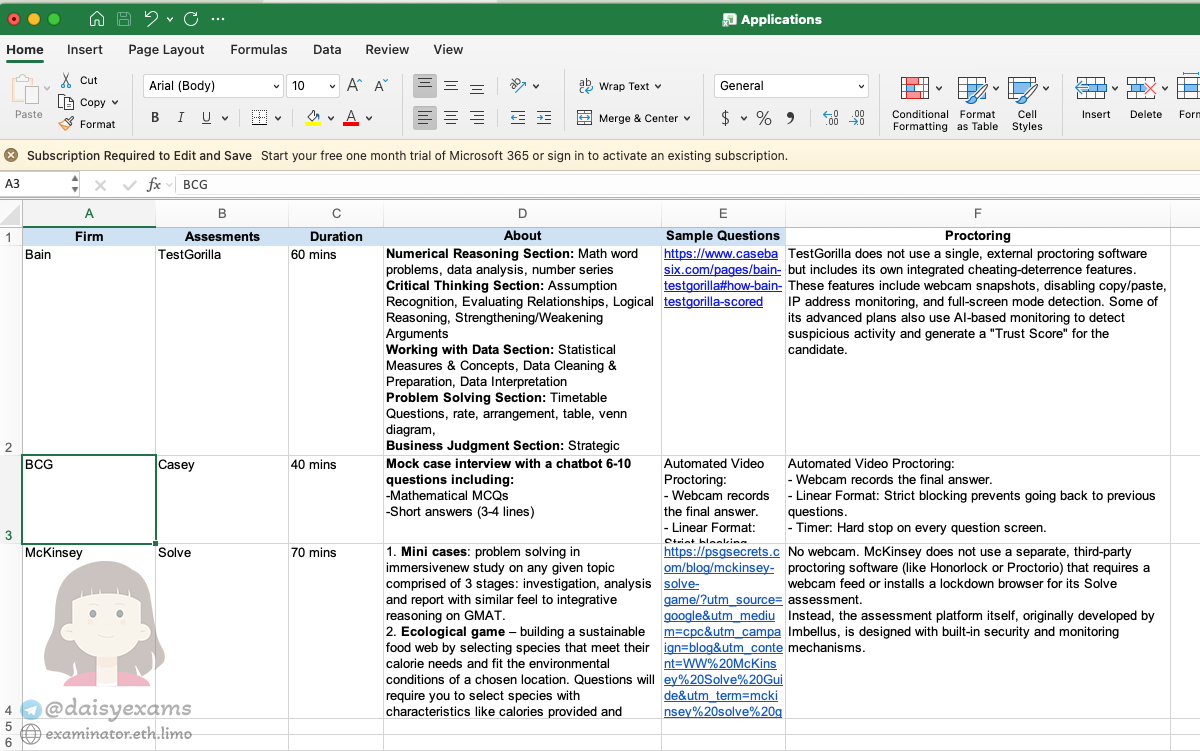
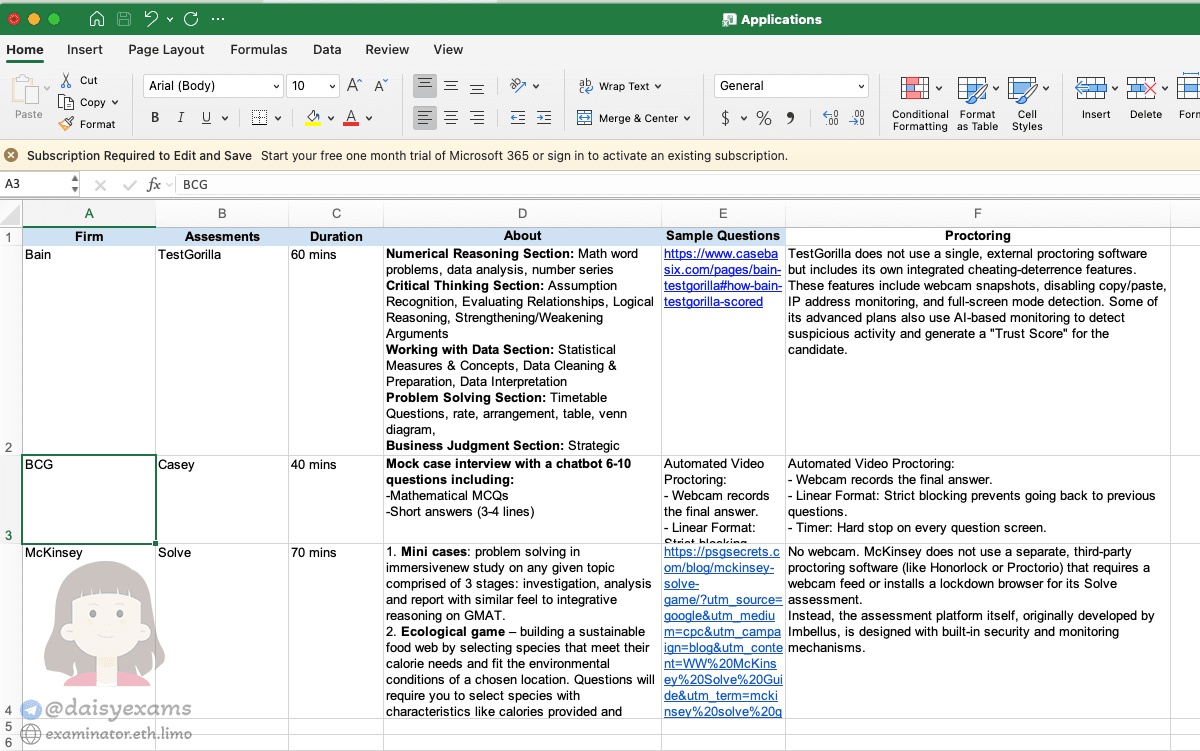
1. Bain & Company: TestGorilla
This is the one the client was most worried about. It isn't a game; it's a standard test, but very strict.
- What it is: 60 minutes of math, logic, and problem-solving.
- The Hard Part: You have to switch tasks fast. One minute you are doing math, the next you are reading paragraphs of text.
- The Rules:
- No Pausing: Once a section starts, the timer keeps running. You can't stop.
- They Are Watching: The system checks your camera and microphone before you start. They have to stay on.
- The "Trust Score": They track if you leave the window. If you exit full-screen mode, the questions disappear and they flag you.
- Official Link: TestGorilla Welcome Screen
2. BCG: Casey
This is a chatbot. It feels like texting a client or a boss.
- What it is: A 40-minute chat session. You answer 8–10 questions about a business problem.
- The Hard Part: You cannot go back. It's linear. Once you send an answer, it’s done. You can't fix mistakes.
- Official Source: BCG Online Case Process
3. McKinsey: Solve (The Game)
This is a video game. There is no business content at all—just animals and islands.
- What it is: 70 minutes. You play two games: building a food chain (Ecosystem) and analyzing data (Redrock Study).
- The Hard Part: They score how you play, not just if you win. They track every mouse click and every time you hesitate.
- Official Source: McKinsey Solve Game
Part 2: How We Beat Bain (The Digital Test)
Deadline: November 16.
The Problem: The client was scared the "Trust Score" software would catch him if he tried to cheat.
We didn't just give him answers. We took over his computer.
- The Setup: We told him to buy a brand new Windows laptop. This made sure no other programs would trigger the security alarms.
- The "Ghost" Driver: We used a proprietary remote access tool. It lets us control his mouse and keyboard from our end.
- The Acting: The client sat in front of his webcam. He looked at the screen and acted like he was reading the questions. This kept the proctoring AI happy.
- The Execution: While he acted, our expert solved the math and logic questions remotely. We used a special script to hide our connection so the "Trust Score" stayed at 100%.
Result: He passed easily.

Part 3: The "Visible Hands" Interview
After passing the test, he got a Zoom interview.
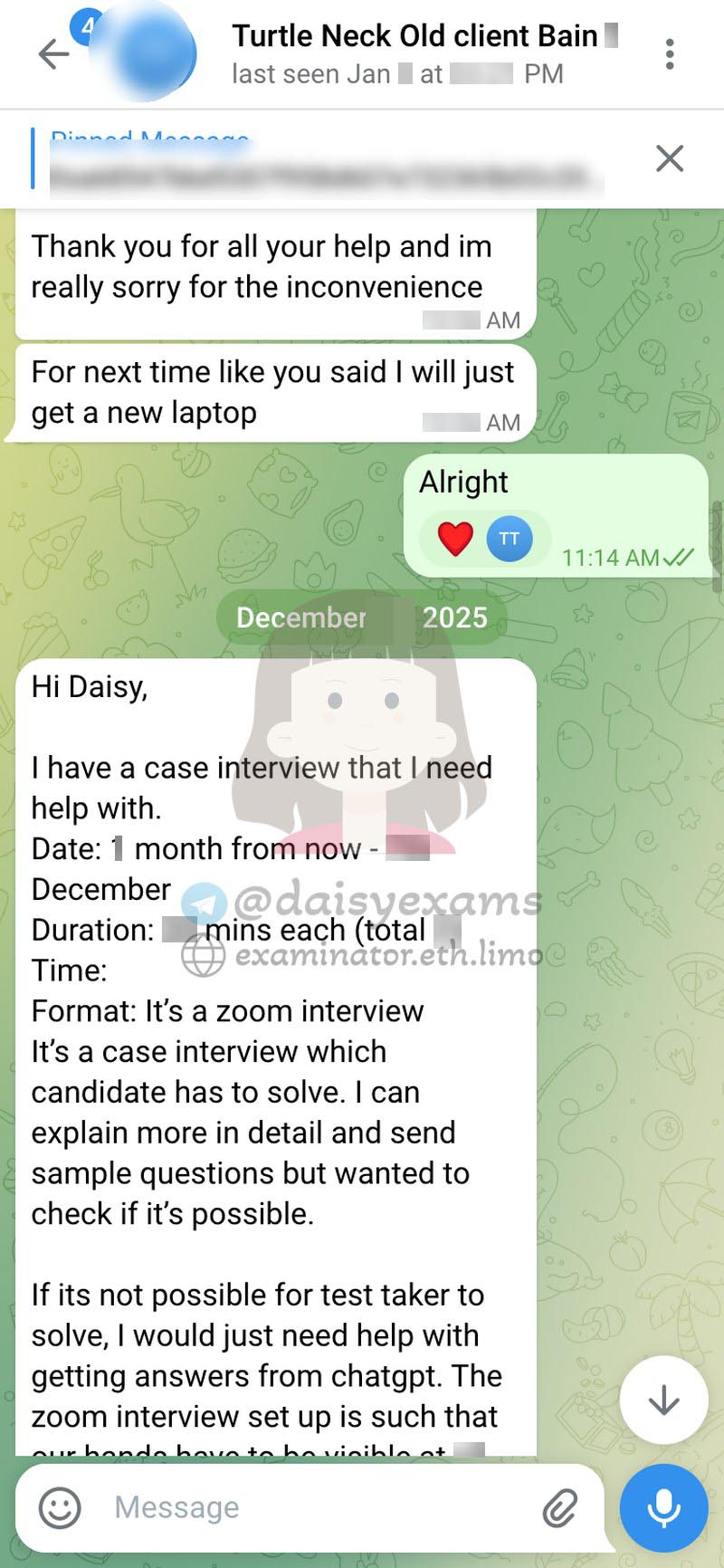
The Twist: The interviewer said, "Keep your hands on the table where I can see them."
This meant he couldn't use his phone or type to ask us for help.
The Solution:
We switched to an audio setup. He wore a tiny, skin-colored earpiece.
-
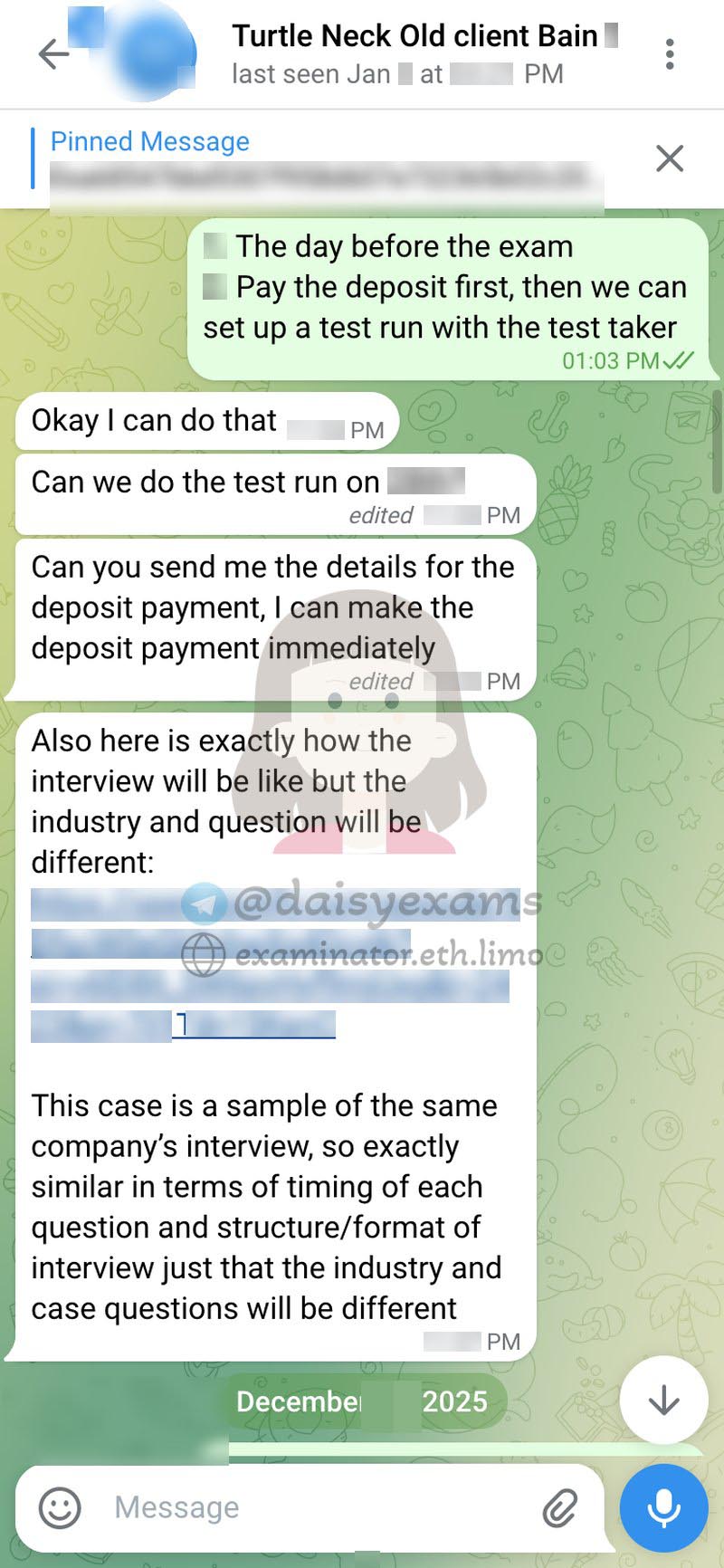
The Case: The interview was about a beverage company entering the US market.
-
The Help: We listened to the interviewer's questions live. Since he couldn't type, we whispered the answers into his ear.
-
The "Diaper" Strategy:
The interviewer asked about pricing for low-income customers. We had practiced this exact case (based on the "BeverageCo" file).
- Our Cue: "Suggest smaller packs."
- Client's Answer: "We should drop the package size from 40 diapers to 20. This keeps our profit margin the same, but drops the price of a box to $10. That makes it affordable for low-income shoppers without hurting our brand."
The Outcome:
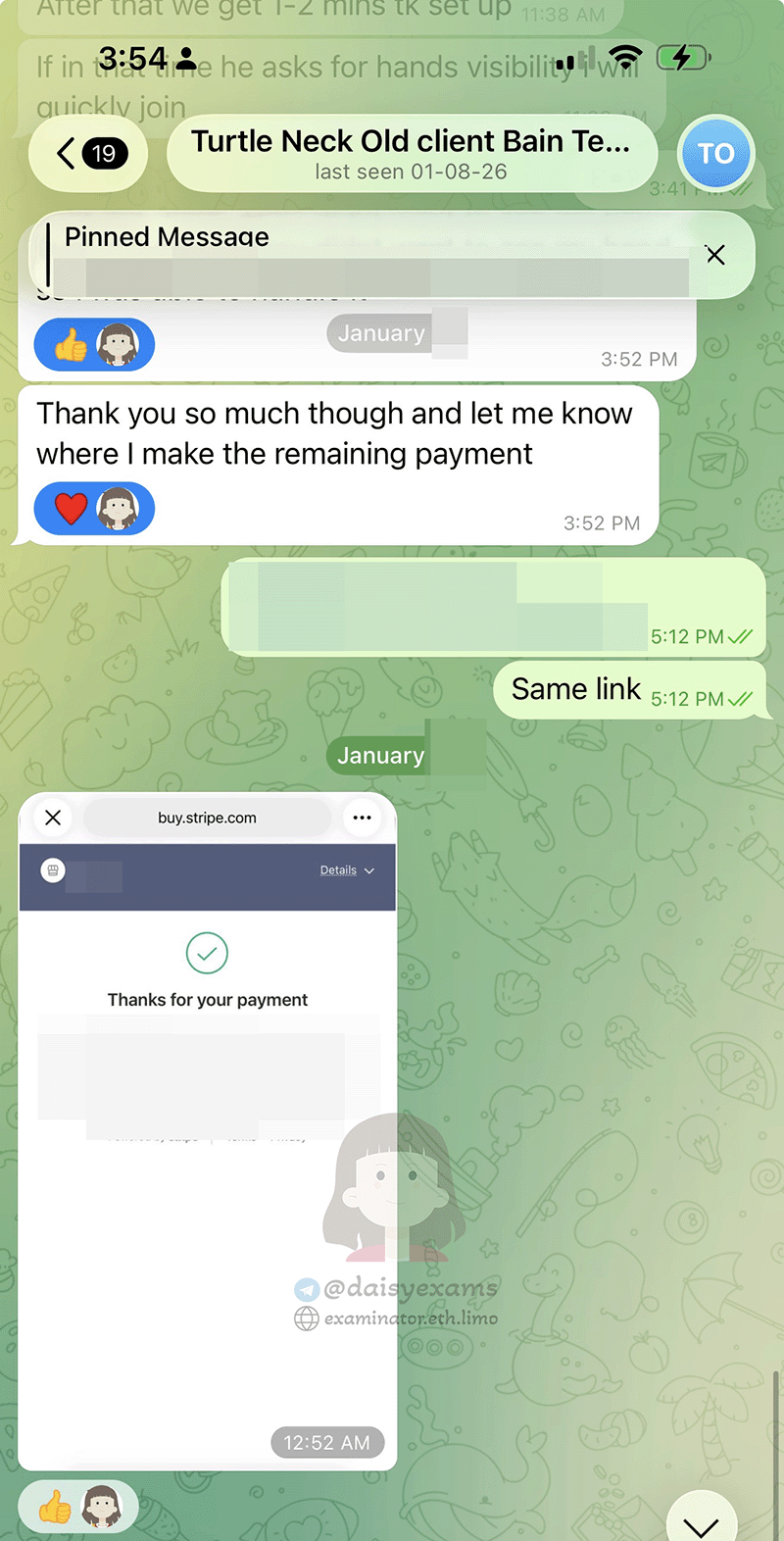
He kept his hands on the table the whole time. He looked calm and confident. He gave the perfect answer in under 30 seconds because we fed it to him. He got the offer.
Related: See our dedicated McKinsey Solve Game page and the 2026 McKinsey Solve format update.